
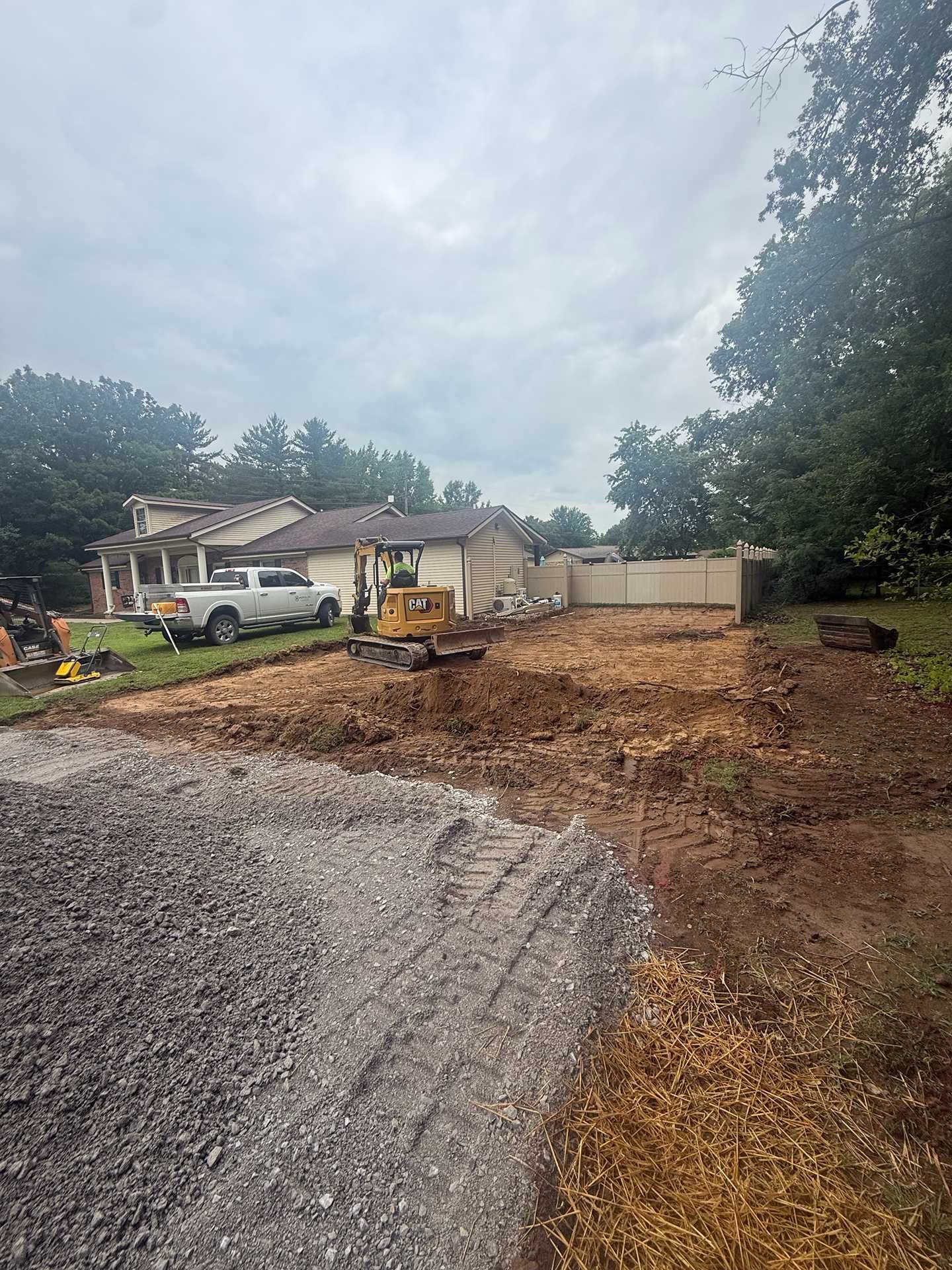
Soil Moved to Fix What Gravity Destroys
Dirt Work in Murphysboro for properties experiencing drainage problems, uneven grades, or inadequate pad preparation
Water flows toward low points, and properties without proper grading collect that water in basements, around foundations, and across driveways where it freezes and cracks surfaces. Heiple-CO Site Solutions addresses these issues through dirt work that reshapes grades, builds up low areas, and creates drainage paths that move water away from structures throughout Murphysboro. This service becomes necessary when properties flood during storms, when new construction requires building pad preparation, or when agricultural operations need land leveled for equipment access and water management.
The work involves moving soil from high areas to low spots, establishing slopes that direct water flow, preparing stable pads for buildings or equipment, and compacting soil to support the loads it will carry. Experienced operators read existing grades to understand where water currently flows and where it needs to flow instead, then use that understanding to shape soil in ways that solve drainage problems permanently rather than temporarily.
Schedule a property assessment to identify grade corrections needed for reliable drainage and stable construction areas.
What You Notice Once Grading Corrects Site Problems
Dirt work starts with identifying problem areas—where water pools, where soil has settled, where grades slope toward structures instead of away from them. Equipment operators then move soil systematically, building up depressions, cutting down high spots, and creating consistent slopes that move water in controlled directions. The process includes compacting relocated soil so it doesn't settle and recreate drainage problems months later, a step that separates quality dirt work from temporary fixes that fail after the first heavy rain.
After grading completes, you'll see water flowing away from buildings during rain events instead of pooling against foundations, driveways and parking areas that shed water rather than collecting it, and building pads sitting at elevations that prevent flooding even during severe weather. The property no longer develops standing water in low areas, and soil compaction prevents the settling that causes uneven surfaces and renewed drainage issues. These changes become especially apparent during Murphysboro's spring storms, when properly graded properties remain functional while neighboring sites with inadequate dirt work turn into mud pits or experience foundation water intrusion.
Customized solutions account for each property's specific challenges—soil type affects how much compaction is needed, property size determines equipment selection, and surrounding grades influence where water can be directed without creating problems for adjacent land. Residential properties often need regrading around foundations and in yards where settling has occurred, while commercial and agricultural sites require larger-scale soil movement to establish functional grades across multiple acres. Municipal properties benefit from dirt work that coordinates with stormwater management plans and public infrastructure requirements.
What Property Owners Usually Ask
Grading projects address diverse problems, from minor settlement correction to complete site recontouring that changes how entire properties manage water and support structures.
What causes properties to develop drainage problems after years without issues?
Soil settlement, landscape changes, new construction on neighboring properties, and alterations to original grading all shift how water flows across land, gradually creating low spots and drainage paths that direct water toward structures.
How much slope is required for effective drainage away from buildings?
Foundation areas typically need grades that drop at least six inches over the first ten feet away from structures, with continued slope that prevents water from reversing direction and flowing back toward buildings.
Why does compaction matter when moving soil to fix drainage issues?
Loose soil settles over time, recreating the low spots and uneven grades that caused drainage problems initially—proper compaction in layers as soil is placed prevents this settling and maintains the drainage grades established during dirt work.
What happens to topsoil during grading projects?
Quality dirt work preserves topsoil by stripping and stockpiling it before moving subsoil, then replacing topsoil after grading completes so properties can support healthy landscaping and vegetation without importing additional soil.
When should dirt work be scheduled to address seasonal drainage problems in Murphysboro?
Late summer and fall typically offer the driest soil conditions for grading work, though urgent drainage issues may require intervention during other seasons when property damage risks outweigh the challenges of working with wetter soil.
Heiple-CO Site Solutions evaluates properties throughout Murphysboro to determine the specific grading corrections needed for long-term drainage performance and structural support. For a consultation about your property's soil and drainage challenges, contact the company at (618) 203-2978.