
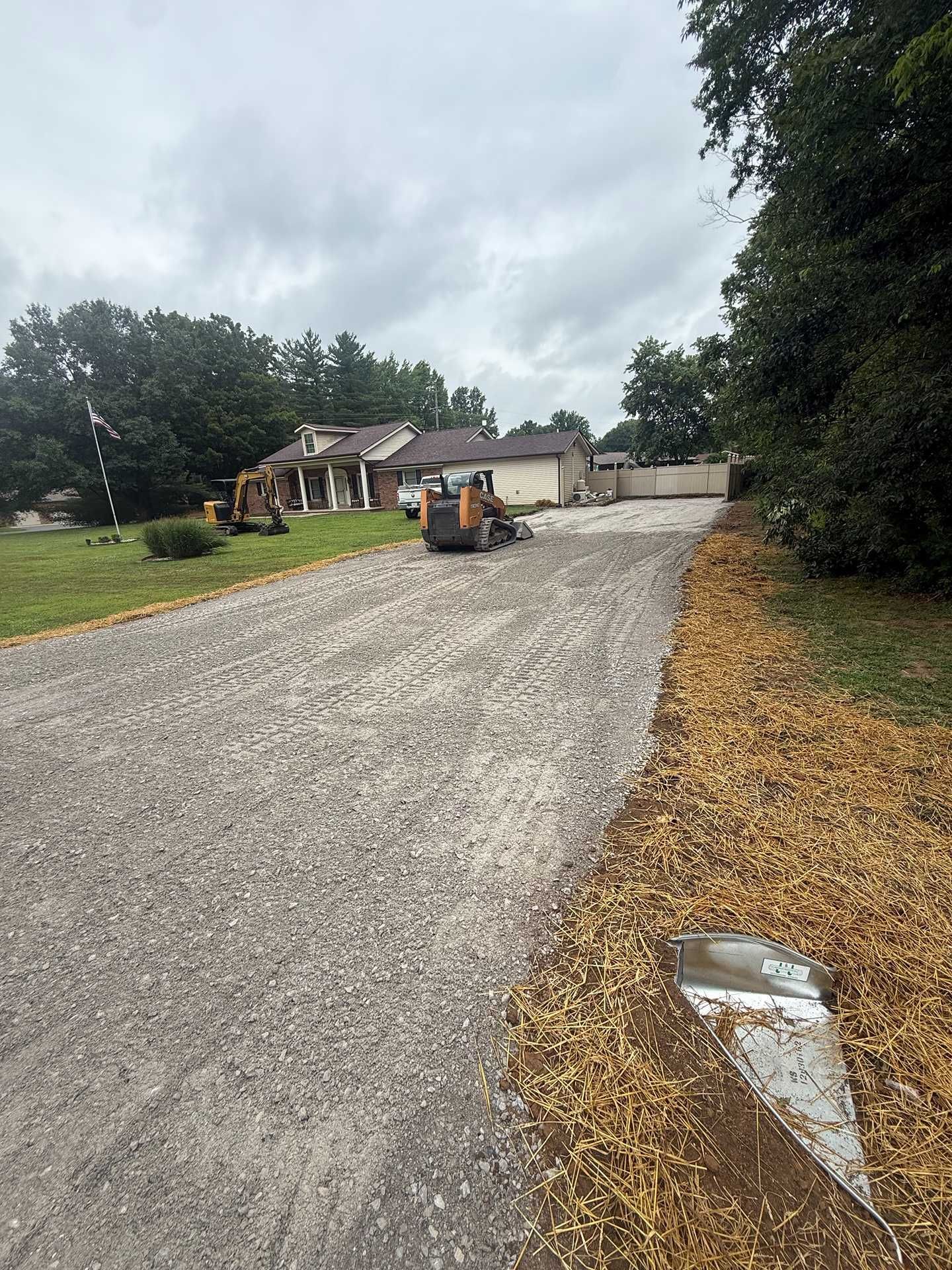
Surfaces That Drain Instead of Puddle
Grading in Murphysboro for construction sites, driveways, and properties where improper slope causes standing water or erosion
Heiple-CO Site Solutions performs rough grading, finish grading, and drainage improvements for properties throughout Murphysboro where water management and surface preparation determine long-term site performance. Grading work creates the slopes and contours that move water away from foundations, prevent erosion on exposed soil, and establish level building pads before construction starts. Properties preparing for new buildings, replacing driveways, or addressing drainage problems need grading that accounts for soil type, rainfall intensity, and how water moves across the site during storm events.
Grading uses bulldozers, graders, and skid steers to cut high areas, fill low spots, and shape surfaces to designed elevations and slopes—typically a minimum two percent grade for drainage while avoiding slopes steep enough to cause erosion or instability. Laser-guided equipment allows consistent grade control across large areas, which matters when preparing parking lots, athletic fields, or building pads that must meet engineered specifications.
Request a grading estimate based on site measurements and drainage objectives for your project.
What Changes After Grading Work Finishes
Rough grading establishes overall site elevations and major drainage patterns early in construction, while finish grading smooths surfaces to final elevations before paving, landscaping, or building construction proceeds. The process removes vegetation, topsoil, and irregular terrain, then redistributes or imports fill material to achieve target grades. Compaction follows grading to prevent settling that would create low spots or compromise pavement and foundation support.
After grading is complete, water flows consistently toward drainage structures or property edges instead of collecting in depressions where it saturates soil and creates muddy conditions. Building pads sit level and at elevations that keep finished floor heights above surrounding grade for positive drainage. Driveways and parking areas slope enough to shed water without forming channels or washouts during heavy rain.
Grading also includes preparation for landscaping installation, ensuring planting areas have appropriate topsoil depth and slope away from structures. Southern Illinois clay subsoils require attention to drainage since clay drains slowly and can hold water against foundations if final grades direct runoff toward buildings instead of away.
What to Know Before Grading Begins
Questions about grading often involve drainage planning, timeline coordination, and how site conditions affect the scope of work.
What is the difference between rough grading and finish grading?
Rough grading shapes major site contours and establishes drainage patterns early in construction, while finish grading fine-tunes elevations to final specifications just before paving or landscaping—each stage serves a different phase of site development.
How much slope is needed for proper drainage around buildings?
Residential grading typically requires at least a two percent slope away from foundations for the first ten feet, which translates to about 2.4 inches of drop—steeper slopes work for areas where faster runoff is beneficial, but excessive slope can cause erosion on bare soil.
Why does compaction matter after grading?
Loose or disturbed soil settles over time under its own weight and surface loads, creating depressions that trap water and damage pavement or structures—compaction eliminates voids and restores soil density to support intended uses without future settling.
How does clay soil in Murphysboro affect grading work?
Clay becomes sticky and unworkable when wet, which delays grading during rainy periods, but it also compacts well when at proper moisture content—grading schedules account for weather and soil conditions to avoid creating drainage problems from improperly handled clay.
What site preparation happens before grading equipment arrives?
Vegetation clearing, utility locating, and erosion control measures typically occur first to allow safe access and prevent sediment from leaving the site during grading operations.
Heiple-CO Site Solutions completes grading for residential, commercial, and agricultural properties with attention to drainage and site-specific soil conditions. Reach out to schedule a site visit and discuss grading requirements for your construction or improvement project.