
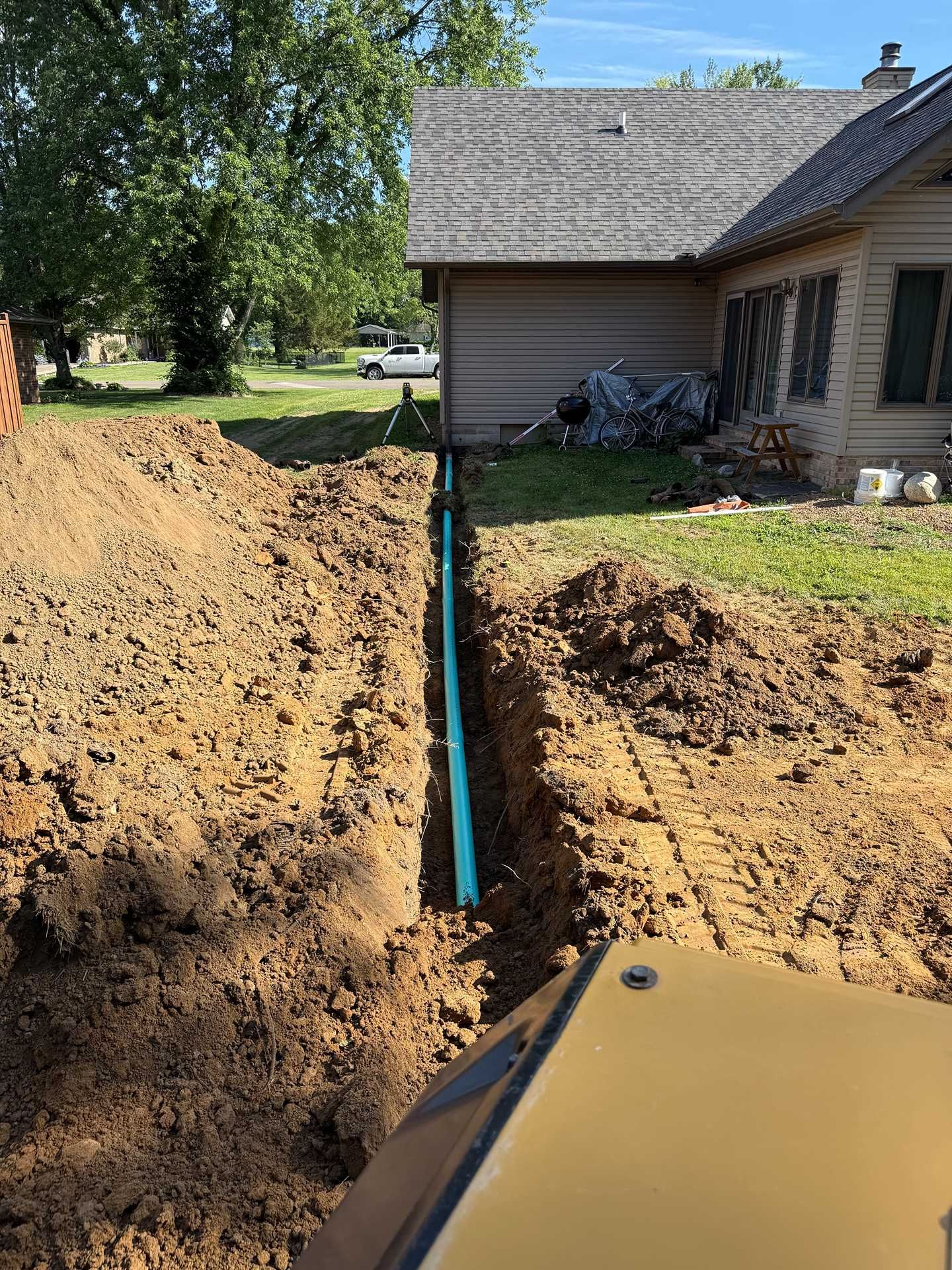
Utility Lines Installed Where They Belong
Trenching in Murphysboro for utilities, drainage, and infrastructure that require precise placement and depth control
Southern Illinois clay soils compact heavily after winter freeze-thaw cycles, which means trenches dug without proper equipment or technique often settle unevenly and compromise utility line stability. Heiple-CO Site Solutions handles trenching for water lines, electrical conduit, drainage systems, and infrastructure projects throughout Murphysboro using excavation equipment that maintains consistent trench walls and floor elevation. Property owners preparing for new construction, adding outbuildings, or upgrading existing utility runs need trenching that supports decades of reliable service without shifting or sagging lines.
Trenching involves cutting narrow channels to specific depths and widths based on utility type, code requirements, and soil conditions, then backfilling in lifts to prevent voids that cause future settling. Modern excavators allow precise control over trench dimensions, which matters when electrical lines must maintain minimum separation distances from water pipes or when drainage lines depend on exact slope for gravity flow.
Schedule an on-site evaluation to review utility routing and trench specifications for your project.
How Accurate Trench Placement Prevents Future Problems
Trenching starts with locating existing underground utilities to avoid service interruptions and safety hazards, then establishing grade stakes that guide excavation depth and alignment. Trench width depends on pipe diameter and whether the installation requires room for workers to make connections—narrow trenches reduce backfill material and site disruption, but some utility codes mandate minimum widths for safe working conditions.
After utilities are installed and inspected, you'll see trenches backfilled in layers that are compacted incrementally to match the surrounding soil density, which prevents the linear depressions that appear months later when loose backfill settles. Proper compaction also protects buried lines from damage caused by surface traffic or equipment crossing overhead. Coordination with contractors and project timelines keeps utility installations on schedule without delaying other site work.
Trench depth must account for frost line penetration in this region—water lines placed too shallow can freeze during prolonged cold snaps, while electrical conduit buried below code-minimum depths complicates future access for repairs. Drainage trenches require consistent slope without low spots where water stagnates, which means laser-guided excavation or frequent grade checks during digging.
Questions About Trenching for Your Property
Property owners in Murphysboro often ask about trench dimensions, timeline considerations, and how soil conditions affect the work.
What determines how deep a trench needs to be?
Trench depth depends on utility type and local frost line requirements—water lines in Murphysboro typically run at least 36 inches deep to stay below the frost zone, while electrical conduit depth varies based on voltage and whether the line runs under driveways or landscaped areas.
How is trench width decided for different utilities?
Width depends on pipe diameter, connection access needs, and whether multiple utilities share the same trench—narrow trenches work for single small-diameter lines, but larger pipes or bundled utilities require wider channels to allow proper bedding material placement and safe working clearance.
What happens if existing utilities are discovered during excavation?
Work stops immediately while the utility owner is contacted to verify line location and condition—trenching resumes once clearance is confirmed or the route is adjusted to maintain safe separation distances from existing infrastructure.
How long does trenching take for a typical residential utility installation?
Timeline varies with trench length, soil conditions, and site access, but straightforward residential water or electrical line trenches often complete within one to two days including backfill and compaction.
Why does backfill need to be compacted in layers instead of all at once?
Loose soil settles over time under gravity and surface loads, creating depressions that damage pavement or landscaping—layered compaction eliminates voids and restores soil density to match undisturbed ground, which prevents future settling along the trench line.
Heiple-CO Site Solutions completes trenching for utility and drainage projects with modern excavation equipment and attention to depth accuracy. Request a consultation to review trench routing and project coordination for your infrastructure needs.