
Stormwater Systems That Actually Move Water
Storm Sewer Installation in Murphysboro for properties where runoff pools, erodes slopes, or overwhelms existing drainage infrastructure
When storm sewer pipe slope drops below one percent, water velocity slows enough for sediment to settle inside the line and reduce flow capacity over time—a common issue in installations that prioritize shallow trenching over proper grade. Heiple-CO Site Solutions installs storm sewer systems for residential, commercial, agricultural, and municipal projects using excavation and grading techniques that maintain consistent pipe slope from inlet to outlet. Properties dealing with standing water after heavy rain, erosion along slopes, or saturated ground near foundations need drainage infrastructure designed to handle peak flow volumes without backup or overflow.
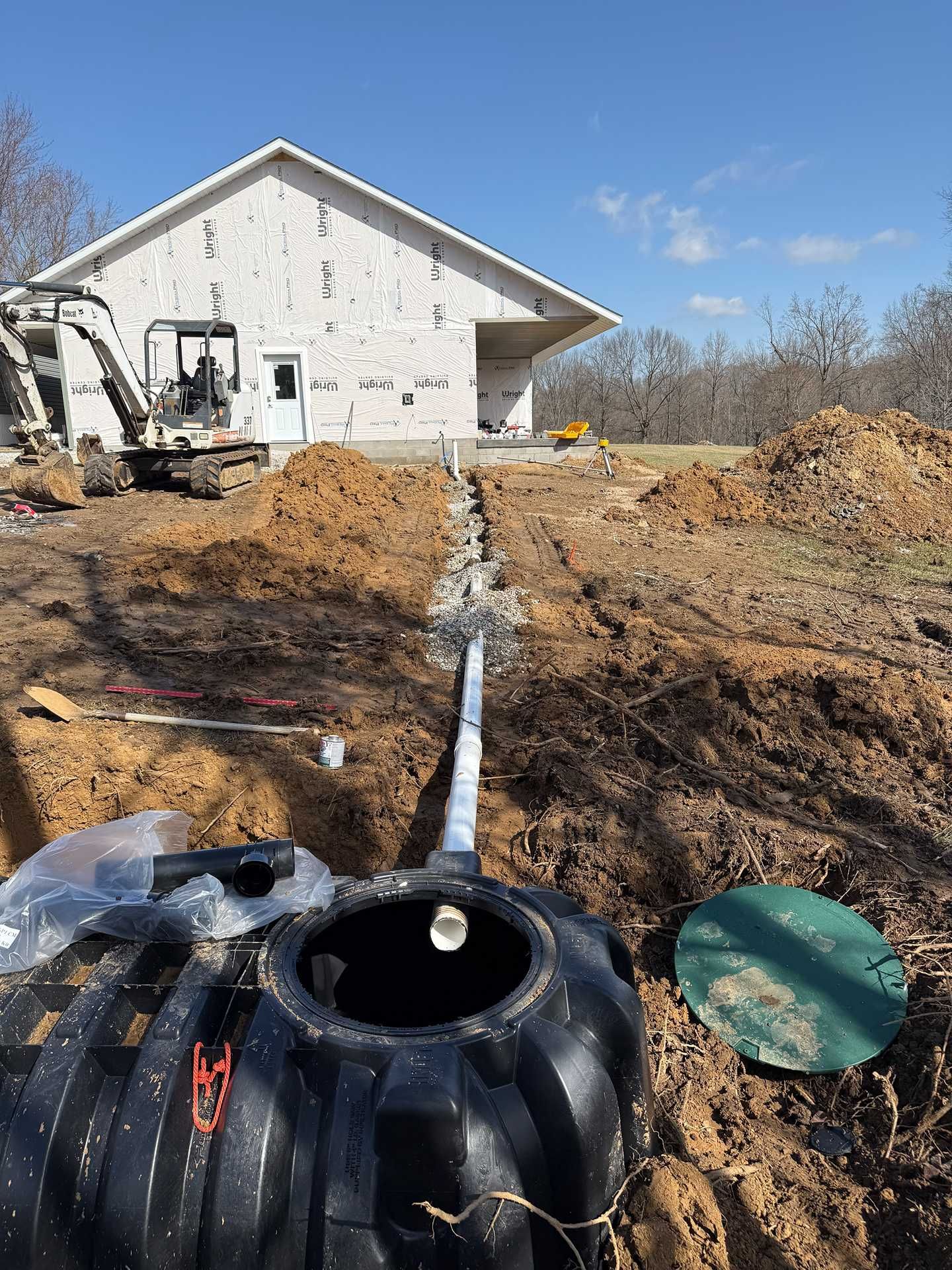
Storm sewer installation involves trenching to precise depths, laying perforated or solid pipe depending on collection versus conveyance needs, connecting catch basins or inlet structures, and grading around the system to direct surface water into collection points. Proper excavation ensures pipe joints remain watertight and the system maintains grade through settling cycles.
Arrange an on-site consultation to evaluate drainage patterns and storm sewer routing for your property.
Why Proper Excavation and Grading Matter for Storm Drainage
Storm sewer design starts with identifying high points where water collects and low points where it can discharge safely away from structures and neighboring properties. Trenching must maintain continuous downward slope without dips or reverse grades that trap water inside the pipe. Pipe bedding material—usually crushed stone—provides a stable, draining base that prevents settling and maintains alignment even as surrounding soil shifts with seasonal moisture changes.
Once installation is complete, surface grading directs runoff toward catch basins or inlet grates rather than allowing water to sheet across paved areas or saturate landscaping. You'll notice water disappears quickly after rain events instead of lingering in low spots, and areas that previously stayed muddy or soft remain usable even during wet weather. Heiple-CO Site Solutions coordinates storm drainage work with site development schedules to avoid conflicts with foundation work, utility installation, or paving operations.
Storm sewer systems handle both new construction drainage and retrofits on existing properties where original grading no longer manages runoff effectively. Installations may include connections to municipal storm mains where available or discharge to drainage ditches, retention basins, or natural waterways depending on local regulations and site conditions.
Common Questions About Storm Sewer Projects
Clients planning drainage improvements often ask about system design, material choices, and long-term performance expectations.
What determines where storm sewer pipes and inlets are placed?
Placement depends on site topography, where water naturally flows during rain, and where discharge can occur without causing erosion or flooding downstream—the system must intercept runoff before it reaches structures or problem areas.
How deep do storm sewer lines need to be installed?
Depth varies with pipe size, required slope, and discharge point elevation, but most residential storm sewers run between two and four feet deep to maintain grade while avoiding conflicts with other utilities.
What is the difference between perforated and solid storm sewer pipe?
Perforated pipe collects groundwater along its length and works for subsurface drainage, while solid pipe conveys surface runoff from catch basins to discharge points without allowing water to infiltrate from surrounding soil.
Why does southern Illinois clay soil affect storm sewer performance?
Clay soils drain slowly and expand when wet, which increases runoff volume during storms and puts more demand on drainage systems—proper grading and adequate pipe sizing prevent system overload during heavy rain events common to the Murphysboro area.
How is the storm sewer system protected from sediment clogging?
Catch basins include sumps that trap sediment and debris before it enters the pipe network, and inlet grates keep large materials out—periodic cleanout of catch basin sumps maintains system capacity over time.
Heiple-CO Site Solutions designs and installs storm drainage infrastructure that manages stormwater runoff and protects properties from water-related damage. Contact the company to discuss drainage solutions for your residential, commercial, or municipal project.