
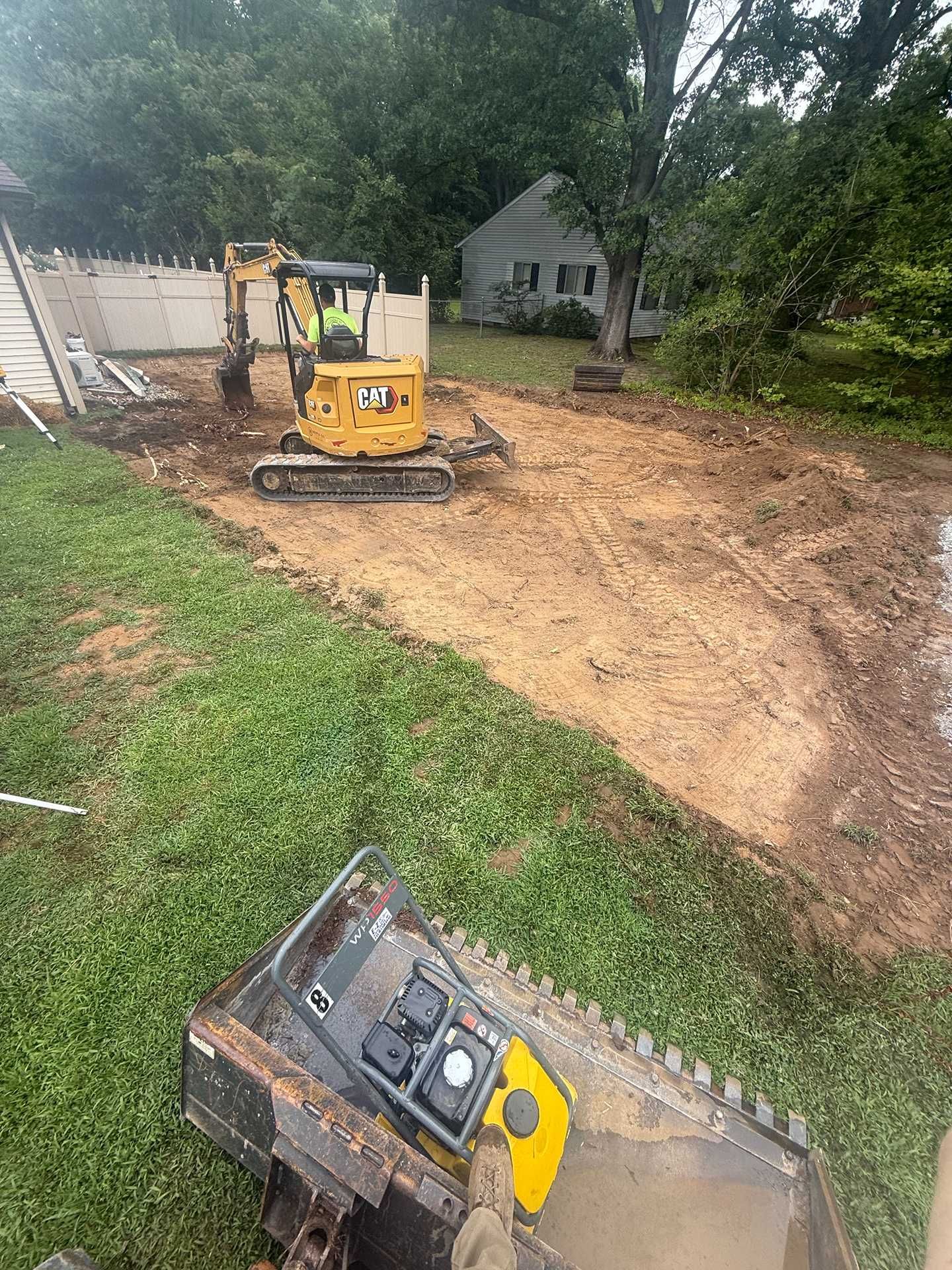
Earth Movement That Sets Construction Up Right
Excavation in Murphysboro for foundations, utilities, drainage systems, and construction projects requiring accurate soil removal
Southern Illinois soil conditions vary significantly across properties—clay content, moisture retention, and subsurface composition all affect how excavation must proceed to support stable construction. Heiple-CO Site Solutions provides excavation services throughout Murphysboro for projects ranging from residential foundations and utility trenches to commercial developments and municipal infrastructure work. Property owners schedule this service when building new structures, installing drainage systems, or preparing sites for utilities that require below-grade routing.
The work involves removing soil to specified depths and dimensions using equipment sized appropriately for project scale, then managing that excavated material through stockpiling, grading, or off-site disposal depending on soil quality and project needs. Modern excavation equipment allows operators to achieve the precision required for foundation footings, utility slopes, and drainage gradients that determine whether systems function correctly long-term.
Request an excavation estimate based on your project plans and site-specific soil conditions.
How Excavation Supports Long-Term Project Success
Excavation begins with marking utility locations and establishing grade references that guide depth and slope throughout the dig. Operators then remove soil in layers, monitoring for subsurface water, unexpected soil composition changes, or underground obstructions that require plan adjustments. Proper grading during excavation—not just after—ensures that foundations sit on undisturbed soil at the correct elevation and that utility trenches maintain the slope required for drainage or sewer function.
After excavation completes, you'll see foundation areas prepared to exact dimensions with stable soil conditions ready for concrete placement, utility trenches routed at correct depths with proper slope for drainage, and excavated material either stockpiled for future grading or removed from the site. Foundations poured into properly excavated areas experience fewer settlement issues, and utilities installed in correctly sloped trenches function without the drainage problems that emerge when excavation shortcuts are taken. The attention to grade references and soil compaction during the excavation phase directly affects whether structures remain level and systems drain correctly over decades of use.
Soil preparation during excavation includes compacting trench backfill in layers to prevent settling, removing unsuitable material from foundation areas, and creating stable base conditions that support the weight and function of what gets built above. Projects in Murphysboro often encounter clay soils that require different compaction techniques than sandy or loamy soils, and excavation operators adjust methods based on what they encounter during the dig. This soil-specific approach prevents the common issue of differential settling that occurs when excavation treats all soil types identically.
Common Questions About Excavation Projects
Every site presents unique soil conditions, access constraints, and utility coordination needs that shape how excavation unfolds from first dig to final grade.
What determines the equipment used for a specific excavation project?
Project scale, soil type, site access, required depth, and proximity to existing structures all influence whether a compact excavator, standard backhoe, or larger machine is appropriate for the work.
How does soil type in Murphysboro affect excavation planning?
Clay-heavy soils require different excavation techniques than sandy or rocky soils, affecting equipment selection, how excavated material is handled, and whether additional soil stabilization or replacement is needed before construction proceeds.
Why does proper grading during excavation matter for foundation performance?
Foundations placed on improperly graded or loosely compacted soil experience settlement issues that cause cracks, uneven floors, and structural stress—problems that proper excavation prevents by creating stable, level base conditions from the start.
What happens to soil removed during excavation?
Depending on soil quality and project plans, excavated material may be stockpiled on site for future grading and landscaping, used to build up low areas of the property, or hauled off when soil quality or quantity exceeds what the site can accommodate.
When should excavation be scheduled relative to other construction activities?
Most projects require excavation completed before concrete crews, utility installers, or builders arrive, with weather conditions and soil moisture levels also affecting optimal timing for excavation work in Illinois.
Heiple-CO Site Solutions coordinates excavation timing with builders, developers, and utility contractors to maintain project momentum without delays. For excavation services tailored to your construction timeline and site conditions, contact the team at (618) 203-2978 to discuss project specifics.