
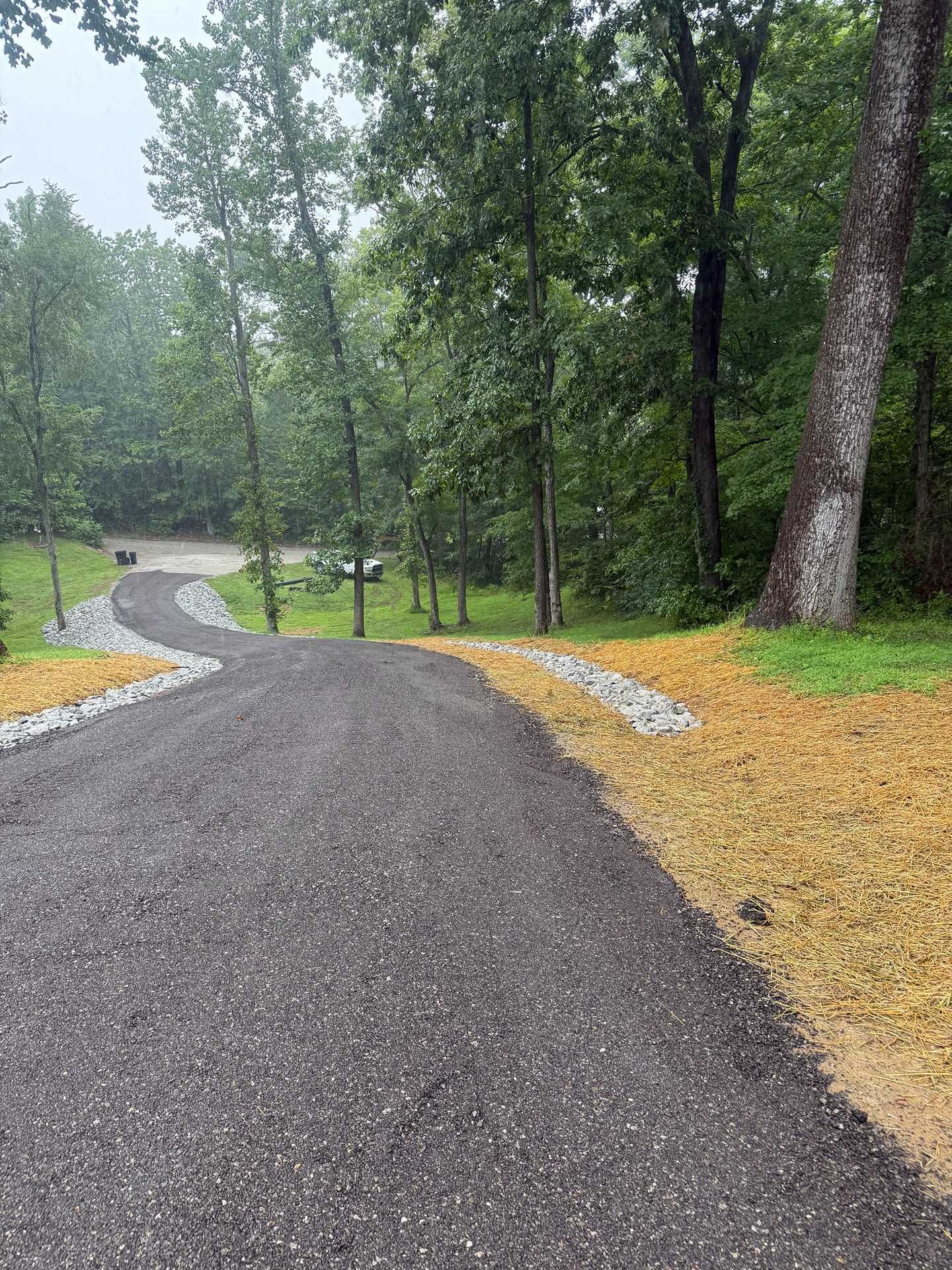
Access Routes Built for Repeated Traffic
Driveway and Gravel Installation in Murphysboro for homes, farms, and commercial properties needing durable access that handles vehicle loads without rutting
Gravel driveways fail when base preparation skips compaction or uses insufficient material depth—vehicles then punch through the gravel layer into soft subgrade and create ruts that collect water and accelerate deterioration. Heiple-CO Site Solutions installs gravel driveways and access roads for residential, farm, commercial, and construction properties throughout Murphysboro using excavation, base preparation, grading, and gravel placement techniques that produce long-lasting performance under repeated traffic. Properties needing reliable access to buildings, fields, or work areas require installations that maintain surface integrity through wet weather and heavy use without constant regrading or material replenishment.
Installation starts with excavating the driveway footprint to remove topsoil and organic material that would compress under load, then grading the subgrade to proper slope for drainage. A compacted base layer of larger crushed stone provides structural support, followed by a surface layer of finer gravel that interlocks and resists displacement under tires. Total depth typically ranges from six to twelve inches depending on soil conditions and expected traffic—farm equipment and delivery trucks need more robust construction than passenger vehicles alone.
Request a free estimate with site-specific recommendations for base depth and gravel type based on your access requirements.
What Makes Gravel Driveways Last
Driveway longevity depends on three factors: adequate excavation depth, proper base compaction, and grading that sheds water off the surface rather than allowing it to soak into the base and soften subgrade. Gravel must be placed in lifts and compacted incrementally—dumping the full depth at once leaves voids and soft spots that develop into ruts. Crown or crossfall slope moves water toward edges instead of letting it pond in wheel tracks where it weakens the base and creates mud during freeze-thaw cycles.
After installation, you'll notice the driveway surface stays firm and level under vehicle traffic instead of developing the washboard texture or deep ruts common in poorly constructed gravel drives. Water drains quickly to the sides rather than standing in the travel lanes, which keeps the surface usable even during extended rainy periods. Proper material gradation means the driveway doesn't require frequent topdressing or regrading to maintain a smooth driving surface.
Gravel driveways work well for properties where paved surfaces aren't cost-effective or where rural aesthetics and permeability are priorities. They also provide temporary access for construction sites or agricultural operations where heavy equipment would damage grass or soil. Material choices include crushed limestone, recycled concrete, or specialized driveway blends depending on availability and performance characteristics needed for the application.
Questions Homeowners Ask About Gravel Driveways
Driveway planning often involves questions about material types, construction methods, and maintenance expectations over time.
What type of gravel works best for driveways in Murphysboro?
Crushed limestone or crushed concrete with angular edges compacts tightly and resists displacement better than rounded river gravel—surface layers typically use smaller material that interlocks while base layers use larger stone for structural support and drainage.
How thick does a gravel driveway need to be for everyday vehicle use?
Residential driveways handling passenger vehicles typically need six to eight inches of total depth including base and surface layers, while farm lanes or commercial drives with truck traffic may require ten to twelve inches over properly prepared subgrade.
Why does excavation matter if gravel is just going on top of the ground?
Topsoil and organic material compress under load and hold moisture, which creates soft spots and rutting—removing this material and replacing it with compacted gravel creates a stable structure that supports vehicle weight without deforming.
How is drainage built into gravel driveway construction?
The driveway is graded with a crown along the centerline or crossfall slope from one side to the other so water runs off into ditches or vegetated areas rather than soaking into the gravel—standing water weakens the base and accelerates deterioration.
What maintenance do gravel driveways need over time?
Occasional regrading smooths minor surface irregularities, and adding topdressing gravel every few years refreshes the surface layer as material gradually works into the base or migrates to edges—well-constructed driveways need minimal maintenance compared to those lacking proper base preparation.
Heiple-CO Site Solutions installs gravel driveways and access roads with quality materials and construction methods that deliver long-term performance. Call (618) 203-2978 to discuss driveway design and obtain an estimate for your residential, farm, or commercial property.