
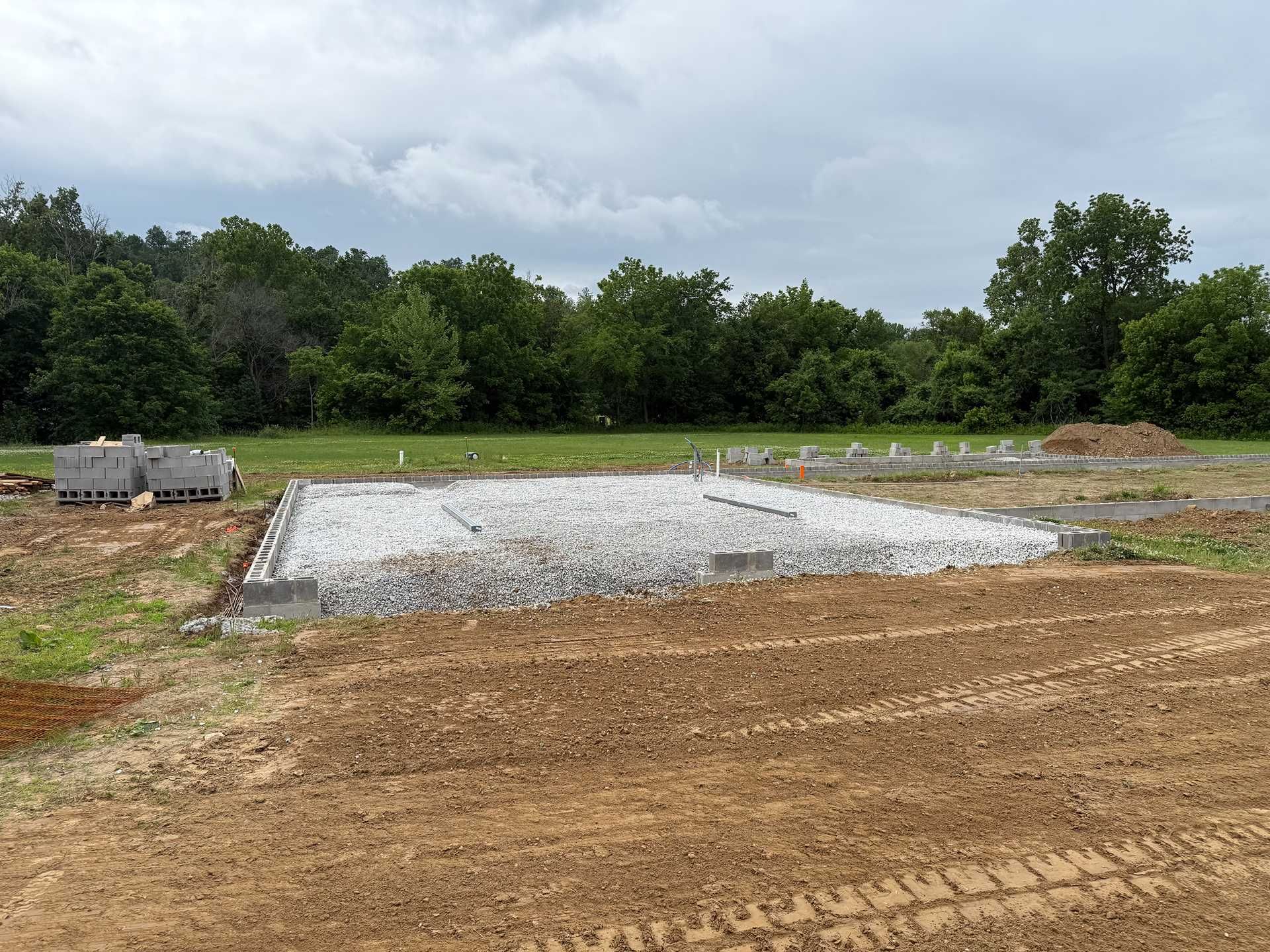
Construction Sites Ready Before Crews Arrive
Site Preparation in Murphysboro for properties requiring clearing, excavation, grading, and utility coordination before building begins
Construction schedules depend on site preparation work happening in the correct sequence—clearing before grading, rough grading before utility trenching, and final grades established before paving or foundation work starts. Heiple-CO Site Solutions handles complete site preparation for residential, commercial, agricultural, and municipal projects in Murphysboro, coordinating clearing, excavation, grading, utility preparation, and building pad development to keep construction timelines on track. Properties transitioning from raw land to building-ready sites need preparation that addresses drainage, access, soil stability, and infrastructure placement without creating problems that delay later phases.
Site preparation begins with clearing vegetation and debris, followed by rough grading to establish major elevations and drainage patterns. Excavation creates building pads, utility trenches, and stormwater management features. Finish grading brings surfaces to final elevations before contractors move equipment onto the site. Each phase must account for soil conditions, weather, and how different site features interact—for example, building pad elevation affects where utility lines enter structures and how surface water drains around foundations.
Contact Heiple-CO Site Solutions to review site preparation requirements and project coordination for your construction timeline.
What Proper Site Preparation Includes
Site preparation involves more than pushing dirt around—it requires sequencing work so each phase supports the next without rework or delays. Clearing removes trees, brush, and topsoil that would interfere with grading or contain organic material that decomposes and causes settling under structures. Excavation establishes building pad elevations, digs utility trenches, and creates drainage features like swales or detention basins. Grading shapes final contours that direct water away from buildings and toward drainage infrastructure.
Once preparation is complete, the site has defined access routes for construction traffic, building pads that sit level and at proper elevations, and utility stub-outs positioned where they connect to building systems. Drainage slopes direct runoff away from work areas so the site remains usable during wet weather instead of turning into a mud pit that halts construction. Efficient project coordination means excavation equipment completes work and leaves before foundation contractors arrive, avoiding scheduling conflicts and site access problems.
Site preparation also includes erosion control measures like silt fencing or temporary seeding on disturbed areas, especially on sloped sites where exposed soil washes during rain. Coordination with utility companies ensures water, electric, gas, and communication services are available when needed without last-minute delays waiting for connection crews.
Answers to Site Preparation Questions
Property owners planning construction projects often want clarity on what site preparation involves and how it fits into overall timelines.
What happens during the clearing phase of site preparation?
Clearing removes trees, stumps, brush, and surface vegetation from areas designated for construction, then strips and stockpiles topsoil for later use in landscaping—the goal is to expose subsoil suitable for grading and compaction without damaging material that has value for final site restoration.
How does site preparation accommodate future utility connections?
Preparation includes trenching to property lines or building locations for water, sewer, electric, and gas lines, with stub-outs left at elevations and positions that match building plans—coordination with utility providers ensures services are available when construction reaches connection stages.
Why does building pad elevation matter during site preparation?
Pad elevation determines finished floor height relative to surrounding grade, which affects drainage away from the foundation, basement depth if applicable, and how the building sits visually on the property—proper pad elevation prevents water intrusion and creates the architectural relationship between building and landscape.
How long does complete site preparation take for a typical residential lot in Murphysboro?
Timeline depends on lot size, existing vegetation, soil conditions, and utility complexity, but most single-family residential sites complete preparation within one to two weeks assuming favorable weather and no unexpected subsurface conditions.
What site conditions cause delays or additional preparation work?
Unexpected rock requiring blasting or specialized excavation, high groundwater needing dewatering systems, contaminated soil requiring removal, or poorly draining clay soils needing additional undercut and replacement can extend preparation timelines and affect project costs.
Heiple-CO Site Solutions manages site preparation from clearing through final grading with coordination that supports efficient construction progress. Schedule a consultation to discuss preparation needs and timeline planning for your upcoming project.